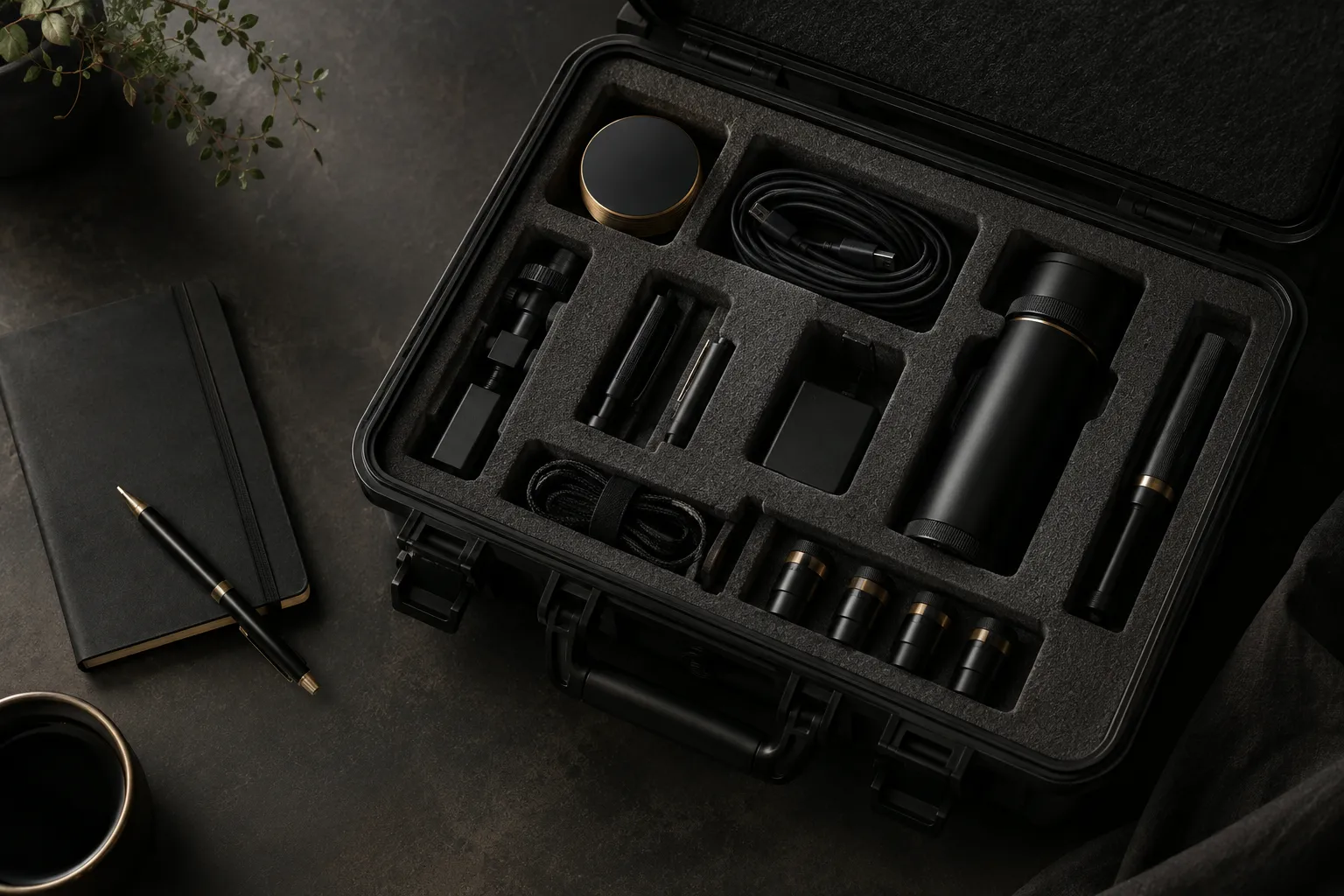
Clinical Trial Data Protection: Pharmaceutical TSCM & Counter-Surveillance for Health Canada-Regulated Research Sites (2026)
By Imperial Consulting Unit Inc. · Licensed PI · TSCM Certified
Clinical Trial Data Protection: Pharmaceutical TSCM & Counter-Surveillance for Health Canada-Regulated Research Sites (2026)
Ontario's clinical trial landscape is undergoing its most significant expansion in a decade. In 2026, the Ontario Together Network and MaRS Discovery District report a fifty-percent increase in active trial site density province-wide, with an estimated fifty to one hundred Phase I through Phase IV studies running concurrently at any given time. Behind each trial sits a data asset valued in the tens of millions to the low billions — proprietary compound data, subject recruitment intelligence, interim efficacy results, and regulatory filing strategy — all targets for well-resourced competitors. Pharmaceutical espionage is not a theoretical risk; it is a recurring pattern in any market where first-to-file exclusivity is worth more than the cost of intelligence gathering.
Against this backdrop, Technical Surveillance Countermeasures (TSCM) has emerged in 2026 as a recognized best practice for Health Canada ICH GCP compliance, D&O insurance underwriting, and pre-trial site security. Imperial Consulting Unit Inc. — led by a CAF Veteran, PSISA-licensed Private Investigator, MESA RF Certified, and TSCM Certified practitioner — is Ontario's dedicated clinical-trial-specialized counter-surveillance provider, with protocols built specifically for the regulatory demands, threat model, and multi-site complexity of pharmaceutical research. Learn more about our credentials and methodology at icunit.ca/about.
If your trial is entering Phase II or Phase III — the highest-value windows for competitive intelligence theft — a single undetected eavesdropping device in a CRO office or principal investigator meeting room can compromise data before a single regulatory page is filed. This guide explains what you need to know, and what to do about it.
Early consultation recommended: For trial sponsors entering Phase II or III, an initial counter-surveillance briefing is available at no obligation — book a confidential consultation with ICUnit before enrollment opens.
Why Clinical Trial Data Demands Specialized TSCM in Ontario
General corporate TSCM — the kind offered by most Ontario security firms — is designed for a fixed-address office with a stable workforce and a known threat perimeter. Clinical trials break every one of those assumptions. A single multi-site Phase III study may involve twenty-five principal investigator sites spread across Toronto, Mississauga, Hamilton, and Ottawa, staffed by rotating CRO field monitors, contract coordinators, and sponsor company representatives — many of whom have unescorted access to the facility's most sensitive zones.
The result is an attack surface that conventional TSCM is not designed to assess. ICUnit's office TSCM sweep service is the starting point for any site-level engagement, but clinical trial environments require an additional layer: multi-site coordination, ICH GCP documentation formatting, and a threat model calibrated to pharmaceutical espionage — not corporate office break-ins.
In 2026, Ontario's post-Theranos regulatory environment has further complicated the picture. Health Canada's Clinical Trials Unit has intensified its data integrity inspection activity, and pharmaceutical companies now face personal liability exposure at the senior director and CEO levels for inadequate security controls over trial data. TSCM has moved from a discretionary security line item to a documented due-diligence obligation recognized by both regulators and insurers.
The Ontario Clinical Trial Threat Model: Five Attack Vectors Pharma Companies Face
Understanding the threat model for Ontario clinical trials requires separating the risk landscape from generic corporate espionage. The following five vectors are documented channels through which trial data has been compromised in North American markets and remain unmitigated at most Ontario sites:
Competitive Intelligence from Rival Pharmaceutical Companies
A competitor conducting parallel research on a similar compound has a clear financial incentive to obtain your Phase II interim results before your publication date. Pre-publication leaks — even partial efficacy data — allow a competitor to accelerate or pivot their own trial, effectively nullifying your first-mover advantage. Eavesdropping devices placed in principal investigator offices, data-review meeting rooms, and sponsor teleconference facilities are the primary vectors for this threat. The competitive intelligence value of a Phase III dataset is sufficient to justify significant adversarial resource deployment — a risk quantified annually in pharmaceutical security literature as running to tens of billions in global annual losses attributable to pharmaceutical IP theft.
CRO Employee Insider Threats During Data Handling
Contract Research Organizations perform essential functions — patient enrollment, data transcription, site monitoring — but they introduce a new class of insider threat with each staff rotation. A disgruntled or externally recruited CRO employee with legitimate site access can install a low-profile audio recorder or wireless data exfiltration device without triggering conventional access-control systems. Post-2023 regulatory scrutiny has heightened attention on this vector, and background vetting for CRO staff with access to trial data storage areas is now a documented best-practice recommendation from clinical trial quality assurance bodies.
Subject Recruitment Targeting by Competitors
In competitive therapeutic areas — oncology, rare disease, CNS — enrollment numbers are a proxy for trial progress. A competitor who learns your enrollment rate, site activation status, or dropout pattern gains a material advantage in forecasting your Phase III timeline. Subject recruitment intelligence is gathered through facility surveillance, not data system hacking — making it a TSCM-detectable and TSCM-preventable threat.
Regulatory Agency Surveillance During Health Canada Inspections
Health Canada site inspections create a documented window of heightened external access. Third parties seeking to obtain regulatory finding data — including draft inspection responses — have historically exploited inspection periods when facility security is disrupted and senior staff are preoccupied with regulatory visitors. This vector intensified post-2022 following high-profile enforcement in the biologics and cell therapy sectors.
Post-Trial Data Targeting During the FDA/Health Canada Review Period
The six-to-twelve-month window between trial completion and regulatory filing is the most overlooked vulnerability in clinical trial security. On-site security is reduced, archival storage has moved to off-site repositories, and the full dataset is at peak value to competitors who can use your findings to shape their own submission strategy. ICUnit's recurring TSCM membership is structured to cover this exposure without disrupting ongoing operations.
Health Canada ICH GCP Guideline 4.8.2: Where TSCM Fits the Data Integrity Framework
The International Council for Harmonisation Good Clinical Practice (ICH GCP) Guideline, adopted and enforced by Health Canada, establishes data integrity as a core compliance obligation for all clinical trial sponsors and sites operating in Canada. The Evidence Act RSO 1990 (Ontario) governs the evidentiary standard to which all TSCM chain-of-custody documentation must conform. Guideline 4.8.2 specifically addresses the sponsor's and investigative site's responsibility to implement security controls protecting source data from unauthorized access, modification, or disclosure.
TSCM is not named explicitly in ICH GCP — it is the implementation mechanism for the physical security dimension of data integrity compliance. When Health Canada inspectors evaluate whether a site maintained adequate data security controls, a documented TSCM sweep log — covering sweep date, scope, methodology, findings, and remediation — demonstrates affirmative due diligence. This documentation is formatted by ICUnit to align with Health Canada audit trail requirements and chain-of-custody standards under the Evidence Act RSO 1990, Section 3, and is presentable to inspectors without modification.
For trial sponsors managing Health Canada submissions, a TSCM audit trail constitutes the physical security component of your data integrity defense — a distinction that matters when regulators are assessing whether a data breach constituted negligence or a foreseeable risk that was adequately mitigated. Ontario's privacy commissioner oversight of subject data, combined with provincial securities law disclosure requirements for public pharmaceutical companies, creates a multi-regulator exposure that a documented TSCM program addresses at a single stroke.
For a foundational understanding of the TSCM methodology underlying these protocols, our introduction to Technical Surveillance Countermeasures covers the instrumentation, detection methodology, and documentation standards in accessible detail.
Who Should Commission a Clinical Trial TSCM Sweep: Five Decision-Maker Profiles
Clinical trial security decisions involve multiple stakeholders, each with a distinct mandate and risk exposure. ICUnit engages directly with the following five decision-maker profiles — providing role-specific briefing documents so each receives information relevant to their accountability:
- Pharmaceutical Project Manager: Accountable for trial timelines and protocol integrity. TSCM is a risk-mitigation line item that protects the study investment and timeline from intelligence-driven disruption. Our engagement model integrates into project milestones — pre-enrollment, mid-trial quarterly, and pre-submission — without requiring schedule modifications.
- Trial Site Director (Principal Investigator): Responsible for regulatory compliance at the facility level. A TSCM sweep report is a documented security certification that supports the site's ICH GCP compliance posture during Health Canada inspections and demonstrates proactive governance to sponsor company auditors.
- CRO Quality Assurance Lead: Mandated to verify data handling integrity across all site activities. TSCM of CRO workspaces, field monitor offices, and data transcription areas demonstrates QA-level diligence on physical security vulnerabilities — a gap that purely IT-focused QA programs consistently miss.
- Pharmaceutical Legal Counsel: Focused on D&O liability exposure and litigation risk from data breaches. A documented TSCM program establishes "due care demonstrated" — the standard applied in regulatory negligence claims against directors and officers who failed to implement reasonable security controls. Firms including Blake Cassels, Miller Thomson, Torys, McCarthy Tétrault, and Goodmans have integrated TSCM documentation review into pharma IP litigation support practices.
- Regulatory Affairs Director: Responsible for the completeness and defensibility of the regulatory filing. A TSCM audit trail integrated into the regulatory file demonstrates proactive security governance throughout the trial lifecycle — increasingly influential in Health Canada's assessment of sponsor credibility in data-integrity-sensitive submissions.
Pre-Trial Risk Assessment and Multi-Site Sweep Protocols
The optimal window for TSCM engagement is the thirty-to-sixty-day period before first patient enrollment. At this stage, the site is active, staff have begun moving through the facility, and the trial data infrastructure is being established — but no sensitive interim results yet exist. A threat assessment at this stage establishes the baseline RF profile, identifies structural vulnerabilities in the floor plan (shared wall adjacencies, HVAC access points, contractor access zones), and produces a risk-ranked remediation plan before any data is at stake.
For multi-site trials spanning ten to thirty Ontario facilities, ICUnit operates a coordinated sweep protocol that prioritizes site areas by risk tier:
Priority-Tier Floor Plan Assessment
Not all rooms in a trial facility carry equal risk. ICUnit's clinical trial floor plan prioritization ranks areas as follows: (1) trial data storage and electronic data capture workstation areas; (2) principal investigator and sponsor teleconference meeting rooms; (3) CRO monitor offices and data transcription workspaces; (4) regulatory document storage rooms; (5) subject interview and informed consent areas. General staff zones and patient waiting areas receive secondary assessment. This tiered approach enables full multi-site coverage within a schedule that minimizes disruption to trial conduct.
Staff TSCM Awareness Training Per Site
Each site visit includes a structured briefing for site staff on behavioral indicators of unauthorized device placement, protocols for reporting suspicious items or personnel, and the trial-specific access control measures that sustain TSCM effectiveness between scheduled sweeps. Staff awareness is the most operationally efficient layer in any multi-site counter-surveillance program and is included in every ICUnit clinical trial engagement at no additional charge.
For Ontario-wide multi-site coordination, our office and vehicle bundle package is frequently structured to cover both facility sweeps and the executive vehicle fleet used by sponsor company representatives traveling between sites. Sponsor vehicles moving between trial locations — including the Ottawa research corridor and GTA-area CRO offices — are a documented secondary surveillance target that facility-focused security planning consistently overlooks.
CRO Insider Threats and Unauthorized Device Detection Protocols
CRO field monitors typically carry personal smartphones, tablets, and laptops into secure data areas — devices that can be repurposed as audio or data exfiltration instruments either intentionally or through third-party malware installed without the employee's knowledge. ICUnit's clinical trial engagement includes a CRO-specific sweep protocol that addresses this threat without disrupting legitimate work activities.
The detection stack covers three layers:
- RF Spectrum Analysis (0–3 GHz): Identifies unauthorized wireless transmission from CRO-occupied zones, including GSM, LTE, Wi-Fi, and Bluetooth exfiltration channels.
- Non-Linear Junction Detection (NLJD): Locates powered semiconductor devices — including inactive bugs set to transmit on a schedule — in areas where personal electronics are prohibited, such as data storage rooms and regulatory document archives.
- Network Traffic Analysis: Identifies rogue wireless access points, unauthorized data connections, and anomalous network behaviour consistent with external data exfiltration established through CRO-supplied equipment.
Background vetting recommendations for CRO staff with access to trial data storage areas are provided as part of the engagement deliverable, formatted under PSISA Act 2005 (Ontario) investigation standards and presented to CRO quality assurance leads as part of the site's formal security governance documentation.
For context on how similar insider threat indicators manifest in office environments, our analysis of corporate espionage warning signs covers the behavioral and technical precursors to unauthorized device placement — patterns that apply equally in clinical research settings.
Health Canada Inspection Readiness: TSCM as Regulatory Due Diligence
Health Canada announces Good Clinical Practice inspections with a typical lead time of thirty to one hundred twenty days. ICUnit recommends a dedicated sweep within the thirty-day pre-inspection window, followed by a final sweep the day before the inspection begins. This two-sweep protocol ensures the facility enters the inspection period with a current, documented clean status — and gives your regulatory affairs team a signed TSCM certification available for immediate presentation if data integrity controls are questioned by inspectors.
The post-inspection period carries its own risk profile. Facilities returning to normal operations after inspection often relax physical access controls, creating a window where external parties who monitored the inspection process may attempt device placement. ICUnit's post-inspection sweep — conducted within seventy-two hours of inspection conclusion — documents the facility's return to baseline and identifies any anomalies introduced during the inspection period itself.
All documentation produced by ICUnit in this context — sweep logs, device chain-of-custody records, expert affidavits — is formatted to Health Canada data integrity standards and is defensible under the Evidence Act RSO 1990. For D&O insurance purposes, this documentation positions the corporate officers who commissioned the sweep as having exercised reasonable due care — a material factor in coverage determinations for regulatory negligence claims. ICUnit's office TSCM sweep service page details the technical scope; clinical trial engagements extend this scope with the full regulatory documentation package.
Post-Trial Counter-Surveillance: Protecting Data During the FDA/Health Canada Review Period
Trial completion does not end the data security obligation — it intensifies it. The six-to-twelve-month post-trial review period represents the window of peak data value and peak vulnerability simultaneously. Complete efficacy datasets, draft regulatory responses, and statistical analysis packages are all accessible within the facility's archival systems. On-site security is reduced because the trial conduct team has demobilized. Staff turnover is high. Physical access controls have often relaxed as the sense of urgency from active trial conduct has dissipated.
In 2026, the growing use of AI and machine learning in pharmaceutical drug development has added a new dimension to post-trial data risk. Trial datasets are now primary training assets for competitor AI models — a fact that has materially increased the intelligence value of raw trial data beyond its immediate regulatory purpose. A dataset that would have been of limited use to a competitor five years ago is now a direct input into an AI-driven compound optimization program. ICUnit advises clients in this window that their trial data faces threats that did not exist in prior development cycles, and that conventional post-trial archival security — designed for physical document protection — does not address the electronic surveillance vectors now active against Ontario trial sites.
ICUnit's recurring TSCM membership is the most operationally efficient structure for covering this window. Quarterly sweeps coordinated across all archival sites and sponsor offices provide continuous documentation of the security posture from trial completion through regulatory decision, with each sweep report added to the ongoing Health Canada audit trail. For a detailed review of how surveillance detection operates in complex corporate environments, our office bug sweep detection guide outlines the methodology in practical terms.
TSCM Scope and Investment Framework for Ontario Clinical Trial Sites
Clinical trial TSCM engagements are scoped across tiers corresponding to the trial phase, site count, regulatory documentation requirements, and seasonal trial cycle. Pricing is custom — quoted privately after a confidential consultation. The investment framework operates as follows:
| Scope Tier | Coverage | Regulatory Documentation | Typical Deployment Window |
|---|---|---|---|
| Pre-Trial Threat Assessment | Single site — baseline RF profile, floor plan risk ranking, staff access audit | Site risk assessment report | 30–60 days pre-enrollment (Q1–Q2 trial initiation peak) |
| Comprehensive Site Sweep | Full RF + NLJD + network analysis + CRO device screening | ICH GCP-formatted sweep log, chain-of-custody record | Phase II–III active conduct, pre-inspection window |
| Multi-Site Coordination Package | 10–30 Ontario sites — centralized QA, coordinated scheduling, consolidated reporting | Consolidated multi-site audit report, per-site certifications | Large multi-centre trials, ongoing conduct period |
| Recurring Quarterly Audit | Per site — baseline comparison, anomaly detection, staff awareness refresh | Ongoing Health Canada audit trail entries | Year-round — conduct period through post-trial review |
| Regulatory Documentation Package | Full trial lifecycle documentation, expert affidavit preparation | Health Canada submission-ready security compliance package, Evidence Act RSO 1990 formatted | Pre-submission and inspection response support (Q3–Q4 filing peak) |
The total TSCM investment across the lifecycle of a ten-site trial with a three-year duration represents a fraction of one percent of the typical Phase III trial budget — and delivers a documented defense against regulatory negligence claims with exposure several orders of magnitude larger. Referral partnerships with major CROs operating in Ontario, pharmaceutical legal teams, Health Canada regulatory consultants, and clinical trial D&O insurance brokers are available for professional coordination — contact ICUnit to discuss your organization's referral or engagement structure.
"ICUnit completed sweeps of our four Toronto-area Phase III trial sites before our enrollment window in early 2026. The process was discreet, the documentation was formatted exactly as our regulatory affairs team required, and the written report gave our legal counsel what they needed to satisfy D&O coverage underwriting requirements. One unauthorized device was discovered in a CRO monitor office — that single finding justified the full engagement."
— Regulatory Affairs Director, Ontario biotech firm, North York (2026)
Why Choose ICUnit for Pharmaceutical TSCM in Ontario
A 2026 competitive analysis of Ontario TSCM providers confirms that no other firm publishes a dedicated clinical trial counter-surveillance protocol with ICH GCP documentation, CRO insider threat detection, multi-site coordination capability, and Health Canada inspection readiness support. The distinction matters because clinical trial regulators, D&O insurers, and pharmaceutical legal counsel evaluate security documentation against regulatory standards — not against a generic corporate office sweep report.
ICUnit's qualifications directly relevant to pharmaceutical TSCM:
- CAF Veteran: Operational security doctrine drawn from high-consequence threat-environment protocols, applied to the structured threat model of pharmaceutical intelligence gathering.
- PSISA-Licensed Private Investigator (Ontario): Full legal authority under the PSISA Act 2005 to conduct investigations and produce evidence-grade documentation admissible in regulatory and legal proceedings.
- MESA RF Certified: Validated competency in RF spectrum analysis — the primary detection methodology for wireless surveillance devices in clinical research settings.
- TSCM Certified: Recognized counter-surveillance certification covering the full technical sweep methodology, from instrumentation deployment to findings documentation.
ICUnit operates province-wide and is fully mobile across all Ontario clinical trial sites — from MaRS District Toronto to Ottawa research institutes to Hamilton health sciences campuses. Written reports are formatted for regulatory, legal, and insurance audiences. Expert affidavit availability on discovered devices is included in every engagement scope.
ICUnit Service Area: Clinical Trial TSCM Across Ontario
ICUnit provides pharmaceutical and clinical trial TSCM services across Ontario's full research corridor: Toronto (MaRS Discovery District, University Health Network affiliate sites, downtown pharma offices), Mississauga (major pharmaceutical campus cluster, multiple CRO head offices), Ottawa (Ottawa Hospital Research Institute, Queensway Carleton affiliate sites, NRC research campus), Hamilton (McMaster Health Sciences research sites), Kitchener-Waterloo (Waterloo Institute for Nanotechnology trial sites), Barrie, Kingston, London, and all GTA-region CRO offices and trial sponsor locations. ICUnit deploys to all Ontario locations — no trial site is outside our service range.
FAQs: Clinical Trial TSCM & Pharmaceutical Counter-Surveillance in Ontario
What TSCM protocols should clinical trial sites follow for Health Canada ICH GCP compliance?
Health Canada ICH GCP Guideline 4.8.2 mandates security controls protecting source data from unauthorized access, modification, or disclosure. A compliant TSCM protocol includes a pre-enrollment baseline sweep of all data-handling areas, findings documented in a Health Canada audit-trail format, chain-of-custody records for any devices discovered, and quarterly recurring audits through the post-trial review period. All documentation is formatted to align with Evidence Act RSO 1990 chain-of-custody standards. Pricing is custom — quoted privately after a confidential consultation.
What are the biggest pharmaceutical espionage risks during a Phase III clinical trial in Ontario?
Phase III trials face five primary espionage vectors: competitive intelligence gathering by rival companies; CRO employee insider threats during data transcription; subject recruitment targeting by competitors tracking enrollment rates; increased external access during Health Canada site inspections; and post-trial data targeting during the six-to-twelve-month review period when security is reduced but data value is at its peak. TSCM sweeps address all five through RF spectrum analysis, NLJD, network traffic analysis, and floor-plan-prioritized physical inspection.
How does a clinical trial TSCM sweep differ from a standard corporate office bug sweep?
A standard corporate office sweep addresses a fixed staff, fixed address, and generic threat model. A clinical trial TSCM sweep adds: ICH GCP-formatted documentation for Health Canada audit trails; CRO-specific unauthorized device detection for rotating contract staff; multi-site coordination; subject recruitment area prioritization; pre- and post-inspection sweep scheduling; and expert affidavit preparation under Evidence Act RSO 1990 Section 3. The result meets the regulatory, legal, and operational requirements of clinical trial conduct — not just basic physical security.
Can TSCM documentation support D&O insurance coverage for a data integrity breach at a clinical trial site?
Yes. D&O insurance carriers assess whether senior leadership exercised "reasonable due care" in implementing security controls over regulated data. A documented TSCM program — with sweep logs, findings reports, remediation records, and chain-of-custody documentation — demonstrates affirmative due diligence that positions the corporation and its officers as having taken proactive steps to protect data integrity. ICUnit formats all documentation to meet both Health Canada regulatory standards and insurance carrier evidentiary requirements. Pricing is custom — quoted privately after a confidential consultation.
How many TSCM sweeps does a multi-site Ontario clinical trial typically require across its lifecycle?
A multi-site trial with ten to thirty Ontario locations typically requires: one pre-enrollment baseline sweep per site; quarterly recurring sweeps per site through the conduct period; a dedicated pre-inspection sweep within thirty days of any announced Health Canada visit; a post-inspection sweep within seventy-two hours of inspection conclusion; and quarterly sweeps through the post-trial review period until regulatory decision. The total sweep count across a three-year Phase III trial at a ten-site network commonly ranges from forty to eighty individual site visits, managed under a coordinated multi-site audit program.
What TSCM equipment is used to detect surveillance devices in pharmaceutical trial facilities?
ICUnit deploys pharma-specific TSCM instrumentation: RF spectrum analyzers covering the full detection range for wireless surveillance devices; Non-Linear Junction Detectors (NLJD) to locate powered semiconductor components in prohibited areas; network traffic analyzers to identify rogue access points or unauthorized data connections; thermal imaging cameras for powered devices concealed within walls or fixtures; telephone line analyzers for trial-site teleconference tap detection; and RF shielding effectiveness testing for secure data rooms. All instrument readings are logged as part of the Health Canada-formatted audit trail.
Which Ontario cities does ICUnit serve for clinical trial TSCM?
ICUnit provides clinical trial TSCM across all Ontario research corridors: Toronto, Mississauga, Ottawa, Hamilton, Kitchener-Waterloo, Barrie, Kingston, London, and all GTA-region CRO offices and trial sponsor locations. ICUnit is fully mobile — no Ontario trial site is outside our service range. Pricing is custom — quoted privately after a confidential consultation.
Stay Connected
Follow the ICUnit field log on LinkedIn for Ontario pharmaceutical security threat intelligence, TSCM methodology updates, and regulatory compliance briefings — and read our Google reviews from past sweep clients across the province.
Get Your Free Quote Today
Ontario's clinical trial data security gap is real, and it is undefended by every other TSCM provider in the province. Whether you are entering Phase II enrollment, managing a thirty-site network, or protecting an archived trial dataset during the Health Canada review period, ICUnit has a documented protocol built for your exact scenario.
Pricing is custom — quoted privately after a confidential consultation. No trial is too early or too complex to discuss.
Call: 905-955-7689 — or request a sweep quote online. Confidential, discreet, mobile across Ontario.