
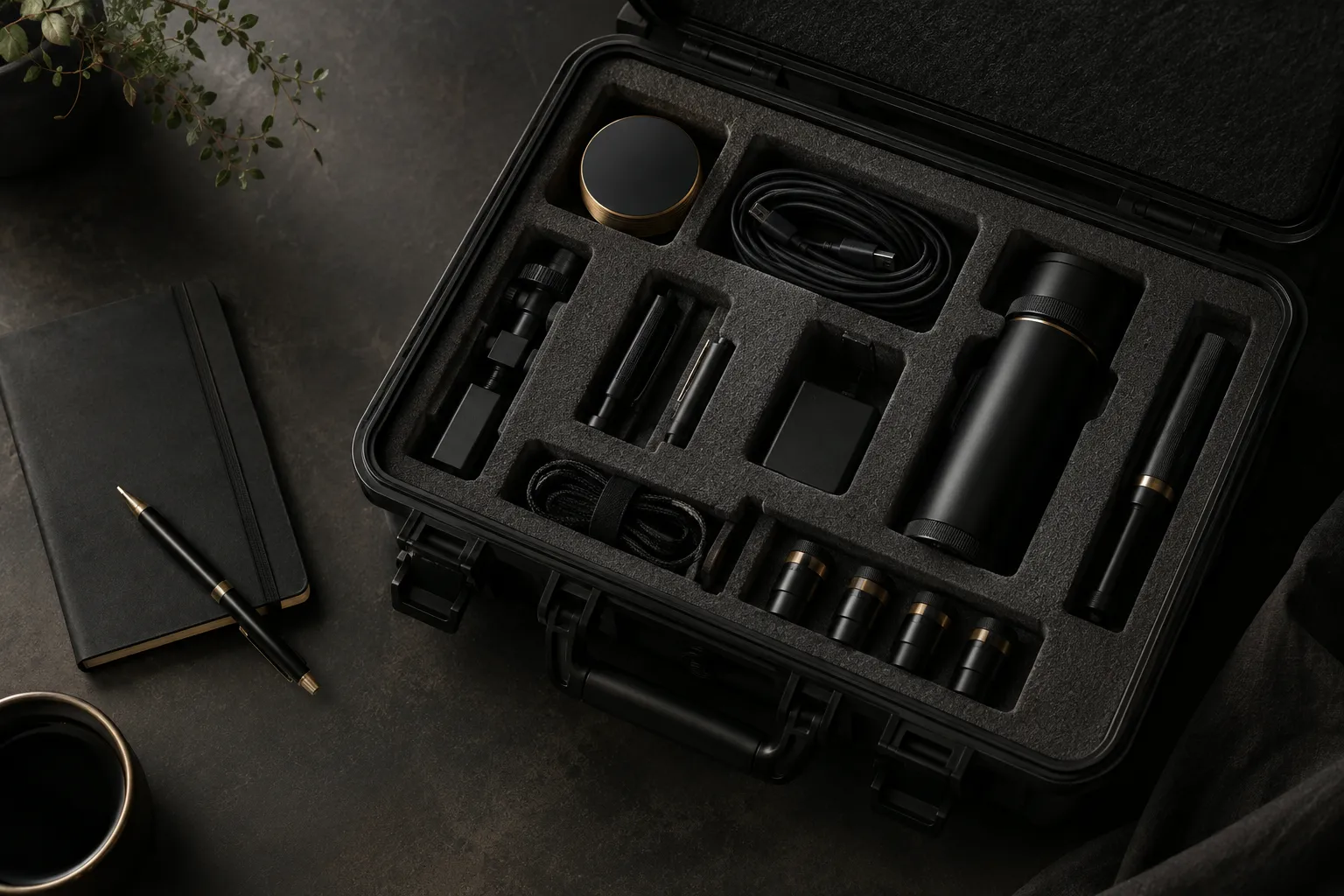
Know what is in the room before it matters.
Technical Surveillance Counter-Measures (TSCM) are professional inspections designed to identify potential technical surveillance devices, vulnerabilities and indicators of unauthorized monitoring within a defined environment.
A preventative discipline, not a reaction.
Sensitive information is rarely lost in a single dramatic event. More often it leaves quietly, through a conversation in a room that nobody thought to check. TSCM exists to reduce that risk before the conversation happens.
An ICUnit inspection combines technical examination with methodical physical inspection of the environment you define: an office, a boardroom, a residence, a vehicle or an aircraft cabin. It is carried out discreetly, often outside business hours, and documented in a confidential written report.
No inspection can promise that an environment will remain secure after we leave. What a professional inspection provides is an informed, documented view of the environment at a point in time, and a practical plan to keep reducing risk from there.
Office and boardroom TSCM is also available as a defined engagement package.
Office PackageEnvironments we inspect
Any space where sensitive conversations take place can be scoped for inspection.
-
Corporate offices
Executive floors, open-plan areas and shared workspaces.
-
Boardrooms
Rooms where decisions, negotiations and board business are discussed.
-
Executive offices
The private offices of leaders, principals and senior counsel.
-
Conference rooms
Meeting rooms, deal rooms and project war rooms.
-
Hotels
Suites and meeting rooms used during travel or off-site sessions.
-
Residences
Private homes and home offices of executives and principals.
-
Vehicles
Executive, personal and fleet vehicles, including GPS tracker detection.
-
Private aircraft
Cabins used as temporary boardrooms, coordinated with the operator.
-
Event spaces
Venues for investor meetings, conferences and private dinners.
-
Temporary meeting spaces
Rented rooms, serviced offices and short-notice locations.
Prevention over reaction.
Most organizations only think about technical surveillance after something has gone wrong: a negotiating position that leaked, a decision that became public too early, a conversation repeated back to them.
By then the information is already out. A preventative program reviews the environments that matter before sensitive conversations take place, and keeps reviewing them as offices, people and schedules change.
You engage us to stay ahead of the threat.
No inspection or program can guarantee that information will never be compromised. Our work is designed to reduce risk, identify potential concerns early and document the steps you have taken.
- Scheduled technical sweeps
- Corporate office assessments
- Boardroom inspections
- Executive environment assessments
- Private aviation sweeps
- Event security assessments
- Post-event checks
- Risk reviews
- Reporting and documentation
- Recurring preventative programs
What you receive
-
Confidential written report
Scope, method, observations and findings, written for leadership or counsel.
-
Practical recommendations
Clear preventative measures specific to the environment and its use.
-
Discretion throughout
Appointment-only, discreet scheduling. Client names are never published.
-
A path to prevention
Guidance on whether a recurring inspection schedule is appropriate.
How an engagement works
Every engagement follows the same disciplined sequence. We don’t publish operational detail about how inspections are conducted, because that information would help the people an inspection is designed to find.
- 01
Consultation
A confidential conversation to understand the environment, the people involved and the concerns or upcoming events that prompted the call.
- 02
Advance planning
Scope, timing, access and operational requirements are agreed in advance, so the inspection causes minimal disruption and draws no attention.
- 03
Technical inspection
A combined technical and physical examination of the defined environment, scaled to the risk profile and the space.
- 04
Analysis
Observations are reviewed and anomalies are separated from ordinary activity, with anything requiring further investigation clearly identified.
- 05
Reporting
A confidential written report documents scope, method, observations and findings for leadership, counsel or your security team.
- 06
Recommendations
Practical next steps and preventative measures, including whether a recurring schedule is appropriate for the environment.
Who requests TSCM
- CEOs and executive teams
- Boards of directors
- Law firms and in-house counsel
- Private equity, investment firms and family offices
- High-net-worth and high-profile individuals
- Security companies and protective details
Licensed. Professional. Accountable.
ICUnit is built on a licensed professional foundation. Every engagement is led under the credentials below, and every credential is verifiable.
About our founder-
Canadian Armed Forces Veteran
-
Licensed Private Investigator — Ontario PSISA
-
MESA RF Certified
-
TSCM Certified
Questions clients ask
Answers from a Licensed PI and TSCM-Certified specialist.
What does TSCM stand for?
Does a TSCM inspection guarantee a space is secure?
Will you tell us what equipment you use?
Can an inspection be done without staff noticing?
How is pricing determined?
Related services
-
Boardroom Security Inspections
Preventative inspections of boardrooms and meeting rooms before sensitive discussions.
Learn more -
Corporate Office TSCM
Discreet TSCM assessments of executive floors, private offices and shared corporate spaces.
Learn more -
Private Jet Sweeps
Pre-flight technical security assessments of private aircraft cabins, coordinated with the operator.
Learn more -
Executive Security & Privacy
Technical privacy assessments that follow the executive: office, residence, vehicle, hotel and aircraft.
Learn more -
Ongoing Security Programs
Recurring preventative assessments scheduled around your risk profile, calendar and environments.
Learn more -
Specialized Sweeps
Vehicle GPS detection, hotel and temporary-space inspections, vessels and pre-purchase property assessments.
Learn more
Discuss your security requirements.
Every consultation is confidential. Tell us about the environment and the timing; we will recommend an appropriate scope.
Appointment only · Open daily 7 AM – 10 PM · Pricing is determined by scope, environment, location and operational requirements.