
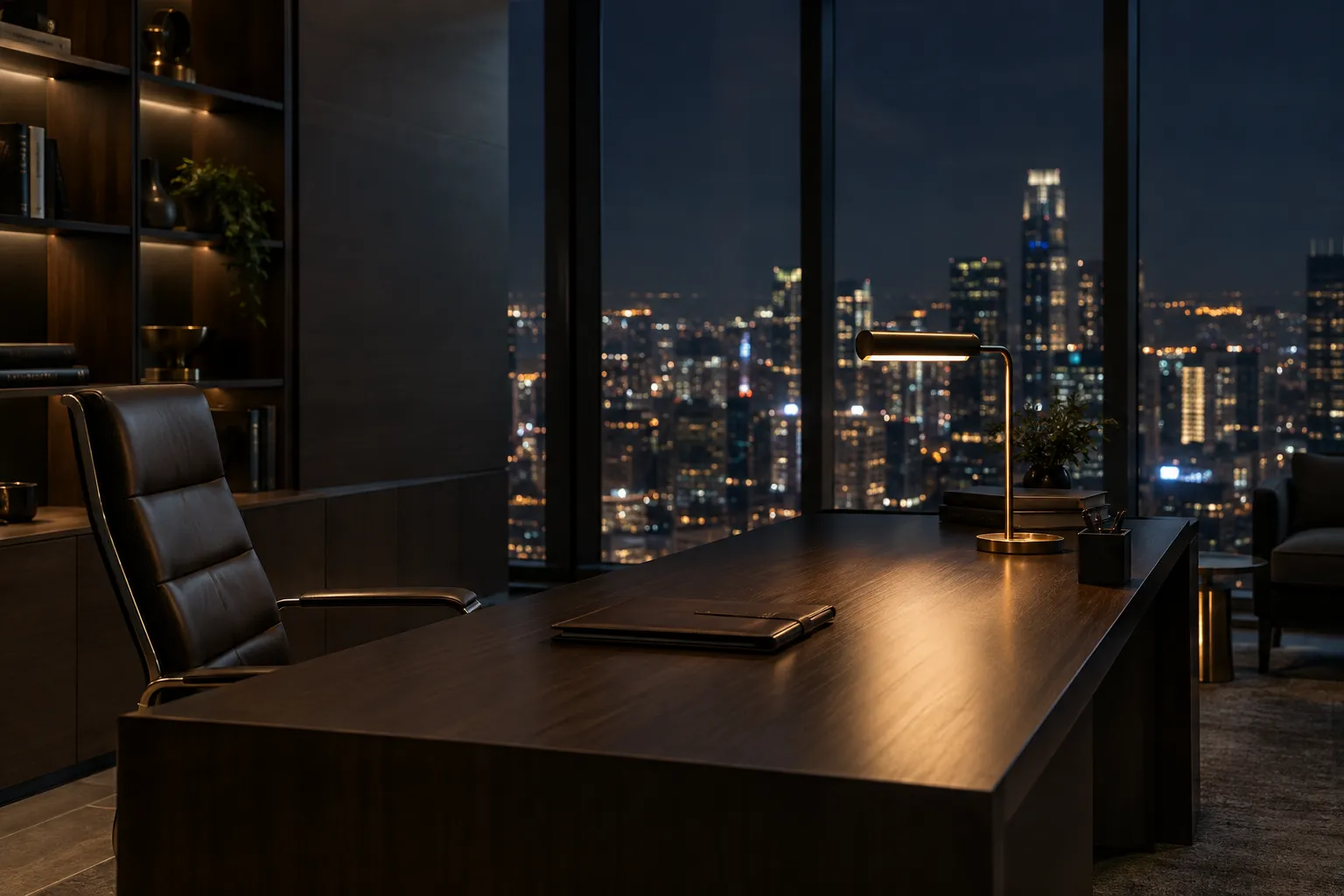
The office is where the strategy lives.
Discreet TSCM assessments of executive floors, private offices and shared workspaces — scheduled around your business, documented for leadership.
Offices change. Risk changes with them.
Renovations, new tenants on the floor, contractor access, furniture deliveries, new technology and staff turnover all change the environment where your leadership works. Each change is a reasonable moment to take a fresh look.
ICUnit office assessments examine the spaces you define — typically executive offices, meeting rooms and areas where confidential material is handled — and document what was inspected, what was observed and what we recommend.
A single office, boardroom or executive workspace is available as the ICUnit Office Package.
Office PackageTypical scope
-
Executive offices
Private offices of the CEO, leadership team and senior counsel.
-
Boardrooms and meeting rooms
Rooms used for board business, negotiations and strategy.
-
Sensitive work areas
HR, legal, finance and project rooms that handle confidential matters.
-
Shared and open areas
Where scope requires, reception, lounges and common spaces.
When organizations schedule an office assessment
-
Before sensitive meetings
Board sessions, negotiations, restructurings and investor discussions.
-
After office changes
Moves, renovations, fit-outs and new contractor access.
-
When something feels wrong
Information appears where it should not, or activity seems unusual.
-
On a schedule
Quarterly, semi-annual or annual inspections as part of a program.
How an office assessment works
- 01 —
Consultation
A confidential conversation to understand the environment, the people involved and the concerns or upcoming events that prompted the call.
- 02 —
Advance planning
Scope, timing, access and operational requirements are agreed in advance, so the inspection causes minimal disruption and draws no attention.
- 03 —
Technical inspection
A combined technical and physical examination of the defined environment, scaled to the risk profile and the space.
- 04 —
Analysis
Observations are reviewed and anomalies are separated from ordinary activity, with anything requiring further investigation clearly identified.
- 05 —
Reporting
A confidential written report documents scope, method, observations and findings for leadership, counsel or your security team.
- 06 —
Recommendations
Practical next steps and preventative measures, including whether a recurring schedule is appropriate for the environment.
Licensed. Professional. Accountable.
ICUnit is built on a licensed professional foundation. Every engagement is led under the credentials below, and every credential is verifiable.
About our founder-
Canadian Armed Forces Veteran
-
Licensed Private Investigator — Ontario PSISA
-
MESA RF Certified
-
TSCM Certified
Questions clients ask
Answers from a Licensed PI and TSCM-Certified specialist.
How long does an office assessment take?
Do staff need to know?
Is the report suitable for counsel?
Related services
-
Boardroom Security Inspections
Preventative inspections of boardrooms and meeting rooms before sensitive discussions.
Learn more -
Corporate Event Security Assessments
Discreet pre-event and post-event technical security assessments for sensitive gatherings.
Learn more -
Executive Security & Privacy
Technical privacy assessments that follow the executive: office, residence, vehicle, hotel and aircraft.
Learn more -
Ongoing Security Programs
Recurring preventative assessments scheduled around your risk profile, calendar and environments.
Learn more -
Corporate Security
Preventative technical security for organizations — offices, boardrooms, events and the executives who lead them.
Learn more -
Technical Surveillance Counter-Measures (TSCM)
Professional inspections designed to identify potential technical surveillance devices, vulnerabilities and indicators of unauthorized monitoring.
Learn more
Discuss your security requirements.
Every consultation is confidential. Tell us about the environment and the timing; we will recommend an appropriate scope.
Appointment only · Open daily 7 AM – 10 PM · Pricing is determined by scope, environment, location and operational requirements.